Media Centre
From science to impact: SFA Foundation releases its 2025 Annual Report
Tuesday, October 27, 2026
The Science for Africa Foundation (SFA Foundation) reports a year in which African institutions set standards, African research reached millions of people, and African voices shaped global decisions on health and climate.
The Foundation today published its 2025 Annual Report. It covers a year of geopolitical change and tightening development finance, and it makes one argument throughout: Africa's scientific future must be shaped by Africans.
"African institutions, sufficiently resourced and armed with trust and agency, can become the global standard," writes Board Chairperson Alinah Segobye. CEO Dr. Tom Kariuki adds that "Africa's scientific future must ultimately rest in African hands," pointing to a growing shift towards domestic financing of research.
A decade of DELTAS Africa
The Developing Excellence in Leadership, Training, and Science in Africa (DELTAS Africa) initiative, funded by Wellcome and the UK's Foreign, Commonwealth & Development Office, marked its tenth year. The programme supports 14 African-led research consortia through 57 institutions in 29 countries. It has supported 1,167 fellows across the research training pipeline, 304 of whom have completed their training, and reached more than 36 million people through science communication.
Its impact is visible in individual lives. In Ethiopia, the Research and Excellence in African Capacity to Control and Treat Cancer (REACCT-CAN) consortium is developing a low-cost HPV self-sampling kit that lets women screen for cervical cancer privately, supporting WHO's goal of screening 90% of eligible women by 2030. In Côte d'Ivoire, the Afrique One REACH consortium's holistic wound-care model for Buruli ulcer, combining clinical care, nutrition and psychosocial support, is shortening healing time and has been submitted to WHO.
African standards, adopted at scale
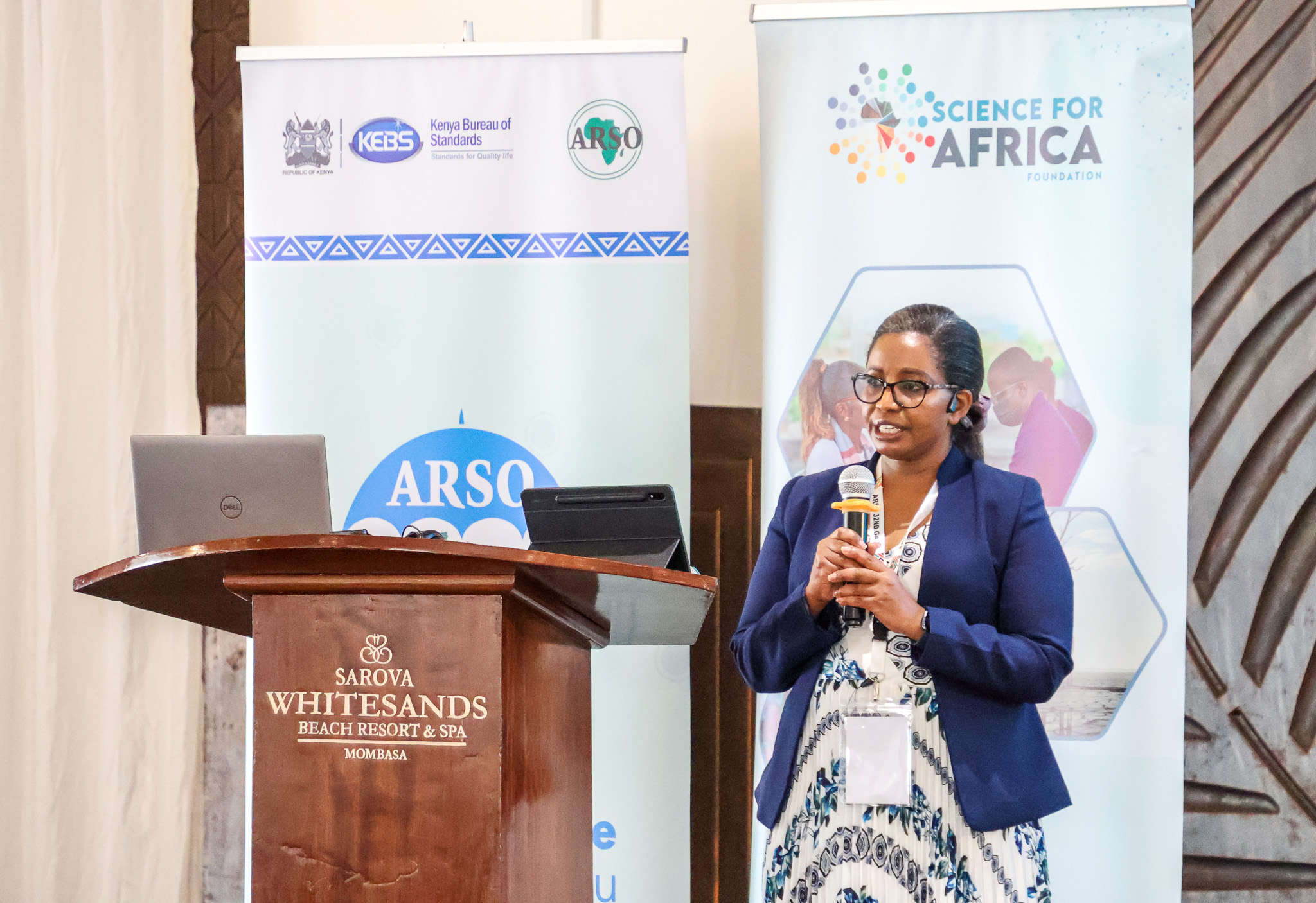
The Good Research Management Practice (GRMP) Standard, the first of its kind in Africa, was published at the 31st General Assembly of the African Organisation for Standardisation (ARSO). The Association of African Universities resolved to adopt and promote it to its members, and Kenya's Principal Secretary for Science, Research and Innovation, Prof. Shaukat Abdulrazak, presided over its official launch. In financial governance, Aga Khan University's Research Office earned Platinum certification under the Good Financial Grant Practice (GFGP) Standard.
Preparing Africa for the next pandemic
The USD 60 million Africa Pandemic Sciences Collaborative, led by SFA Foundation with Oxford University's Pandemic Sciences Institute and supported by the Mastercard Foundation, launched seven Epidemic Science Leadership and Innovation Networks (EPSILONs). The Clinical Trials Community Africa Network consolidated clinical trial readiness in 24 African countries, and the Pathogen Genomics Funders Forum brought together 48 contributing entities to align investment in genomic surveillance.
Innovation, women's health and youth mental health
Grand Challenges Africa now anchors a USD 27 million innovation portfolio and mobilised USD 1.2 million in 2025 for the Modelling for Health in Africa cohort. Its Genetic Associations of Infertility study activated sites in five countries. The global Being initiative expanded youth mental health research to 12 countries across Africa, Asia, Europe and Latin America, and a new partnership with the Mental Health Innovation Network will bring the Global Mental Health Africa Conference to Nairobi in February 2027.
A stronger voice in global decisions
SFA Foundation represented African interests at the UN General Assembly Science Summit, the G20 and the Intergovernmental Panel on Climate Change. It helped produce the continent's first Africa Health Security Index and co-designed a Climate and Health Innovation Programme, starting at USD 50 million with a goal of USD 150 million over five years, recognised as a Commitment to Action at the 2025 Clinton Global Initiative. Six AI and global health policy reports reached 5.9 million people in 27 countries, and the inaugural Evidence for Development Conference drew more than 230 participants from 25 countries.
Making science heard and trusted
The Foundation launched the Echoes of Evidence podcast to rebuild public trust in science, and the second Africa Science Journalism Awards drew nearly 200 applicants from more than 20 countries.
Financial strength in a constrained year
SFA Foundation recorded USD 30 million in income and managed a cumulative grant portfolio of almost USD 216 million. Unrestricted income grew by more than 50% to USD 1.66 million, total assets rose 42% to USD 24.0 million, and Ernst & Young issued an unqualified audit opinion.
"The Foundation enters 2026 from a position of strength," the report concludes.
Read the full 2025 Annual Report → https://bit.ly/4ihZmwp
The progress in this report was made possible by our funding partners, whose sustained investment underpins African-led science; by African governments committing to invest in their own research ecosystems; and by the institutions and implementing partners who carry this work forward. We are deeply grateful for their trust and collaboration.