Media Centre
Africa to secure ownership of its knowledge systems and data as AI accelerates demand: New report underpins
Monday, November 16, 2026
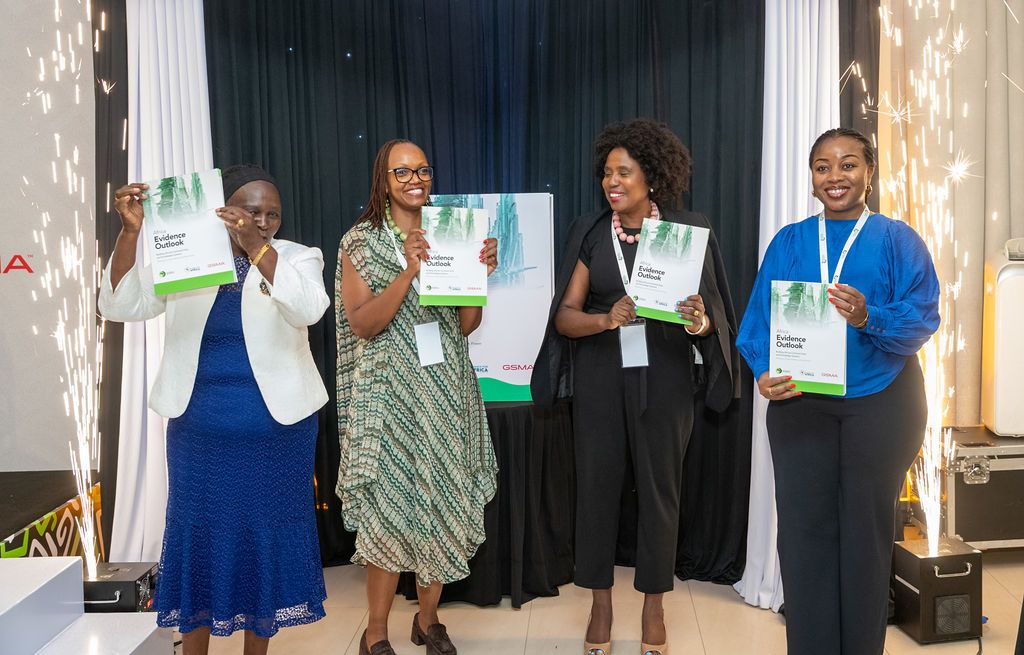
African institutions have made significant progress in setting policies and developing frameworks that govern artificial intelligence, knowledge systems, and data. However, a newly released report, the Africa Evidence Outlook, warns that the continent risks losing control of these assets unless it urgently invests in long-term governance systems, ownership, and sustainability. It underscores that the next challenge on the data management frontier is not collecting more data but ensuring African institutions and communities can govern, fund, maintain, and use the systems built from it, especially as AI makes that data more valuable.
The Africa Evidence Outlook report, produced through an analysis of data and knowledge portfolios of the African Population and Health Research Center (APHRC), the Science for Africa Foundation (SFA Foundation), and GSMA, was unveiled today at the 3rd Africa Health and Development Annual Research Symposium (AHDARS) and is themed “Building African-Centered Data and Knowledge Systems: Pathways to New Models and New Power. The inaugural report states that while Africa has spent time shaping the rules that govern data and knowledge systems, these systems still depend on short-term projects, infrastructure, and external funding beyond the continent’s control. It examines more than twenty systems across health, education, genomics, research data, and AI. Additionally, it identifies opportunities and emerging challenges and proposes an agenda to strengthen African stewardship and ownership of data-driven systems.
The Africa Evidence Outlook report maps key continental, regional, and national instruments governing data and AI, including the Malabo Convention and the Africa Declaration. While these frameworks show growing political commitment, the report finds that financing, infrastructure, and limited technical capacity among governments and institutions still constrain implementation. The disparities are significant. Across many African states, capacity and willingness to execute vary starkly. The continent contributes about 2.8 percent of the world’s scientific knowledge and holds less than 1 percent of global computing capacity. Evidence reviewed in the report from 67 institutions in 28 countries found limits in storage, software, connectivity, and energy.
“Africa is clear on its future data direction relooking at data governance, ownership and sovereignty. We as Africans need to turn Africa data commitments into reality including the Malabo Convention, the AU Data Policy Framework, and the continental AI strategy. What is at stake is the ability to decide what is built from African data and knowledge, for whom and on what and whose terms to ultimately translate research into policy, technology and innovation, while strengthening African-led knowledge systems,” said Dr. Catherine Kyobutungi, Executive Director of APHRC.
Despite these challenges, the report highlights promising examples of African institutions that have found practical ways to achieve data sovereignty by focusing on how data is used rather than where it sits, while maintaining ownership and control. Platforms such as the African Population Cohorts Consortium (APCC) and the Data Architecture Systems and Standards for APHRC (DASSA) show how researchers can bring analysis to the data rather than transferring sensitive datasets outside the continent, allowing custodians to maintain authority over their information while supporting collaborative research, improved discoverability, and use based on terms African institutions set.
“Data sovereignty in Africa is not about restricting data movement but rather setting the terms of access, use, and sharing. Through initiatives such as the APCC, data custodians maintain control and accountability while researchers across jurisdictions analyze it together. That is how we collaborate without giving up authority, and it is the model we want to see scaled across the continent. This goes to show that value is strongest when evidence contributes to decision-making at all levels,” said Dr. Tom Kariuki, Chief Executive Officer, SFA Foundation.
The Africa Evidence Outlook report proposes eight interventions to strengthen African ownership of data and research, including improved discoverability and use based on terms set by African institutions, investment in the implementation of existing continental commitments, and testing regional commitments to ensure data and AI tools and systems deployed in health and public services are tested and validated using local data and contexts. The report also calls for stronger institutional financing models, more investments in computing and digital infrastructure, and long-term support for the organizations and people responsible for maintaining knowledge systems beyond individual project cycles.
“Sustainable digital health needs more than technology. It requires strong institutions, enabling policy, skilled people and trusted systems. The Digital Health Index helps African governments identify gaps and target action and investment where it can have the greatest impact – building stronger health systems and improving access to quality healthcare across Africa,” added Angela Wamola, Head of Africa, GSMA.
The rallying call is for African governments to prioritize investment in data and knowledge infrastructure, research institutions and academia to strengthen local expertise and African-led knowledge production, technology leaders to develop context-responsive solutions, and funders to commit to sustained, flexible financing. Together, we must build data and knowledge systems that Africa owns, governs, and leverages to advance its development priorities.
NOTES TO EDITORS
Download the report brief here: www.aphrc.org/ahdars-2026/
About AHDARS
The annual Africa Health and Development Annual Research Symposium (AHDARS) facilitates sharing rigorous applied research findings and practical experiences to inform evidence-based decision-making across Africa. It fosters peer-to-peer learning, knowledge exchange and dialogue on emerging issues in population, health and development.AHDARS brings together researchers, policymakers, practitioners, civil society, development partners and other stakeholders to share evidence, exchange knowledge and explore innovative approaches to Africa’s health and development challenges.
For media inquiries
- William Mawia, Communications Manager, APHRC, [email protected], + 254 710 599 565
- SFA Foundation, [email protected]
- GSMA Press Office, [email protected]