Impact Stories
Every First Breath: How African Innovation Is Ensuring Survival for Mothers and Newborns
Wednesday, September 30, 2026
Every First Breath: How African Innovation Is Ensuring Survival for Mothers and Newborns
Every pregnancy carries with it hope: the hope that a baby will take a healthy first breath and the mother and child will return home safely.
Sadly, this has not been the case. Globally, in 2024 alone, an estimated 2.3 million babies died during their first 28 days of life, mainly from preventable causes (WHO,2025, WHO, 2026). Mothers, babies and families in Africa suffer a disproportionate share of those deaths. Sub-Saharan Africa accounts for around 70% of global maternal deaths and continues to bear the world's highest burden of newborn mortality.
Across the continent, researchers, clinicians and entrepreneurs are changing that story by developing locally relevant innovations that detect pregnancy risks earlier, help health workers make faster decisions, expand access to life-saving technologies, and ensure women receive care in languages they understand. This article follows that care journey from pregnancy risk detection to clinic support, newborn emergency response, and communication that makes care more accessible.
Supported by Grand Challenges Africa, an initiative of the Science for Africa Foundation, innovators are using artificial intelligence and local research to strengthen health systems and improve outcomes for mothers and babies across the full spectrum of care, from pregnancy and delivery to the first minutes of life and beyond. Their goal is to build a future where mothers are better supported, health workers are better equipped, and every child has a fair chance at survival.
Before Birth: Detecting Pregnancy Risks Early
Some of the most serious threats in pregnancy develop quietly.
Preeclampsia, a condition linked to high blood pressure and organ stress, can begin with few and subtle warning signs before becoming dangerous to both mother and baby. By the time symptoms are clear, the risk may already be high. To address this preventable threat, Professor Obed Brew and his team in Ghana developed AIMPact – an innovative AI an innovative AI diagnostic application that helps midwives and clinicians identify women at risk of preeclampsia before the warning signs become clear – to explore how predictive tools can enable earlier detection by coordinating maternal health records, physiological monitoring and clinical data.
Despite its usefulness, many barriers to AIMPact’s uptake proved to be decidedly low-tech in nature, including costs associated with transportation and clinic visits, which led to sporadic clinical follow-up. The availability of or software incompatibility with existing, smartphones was another barrier.,
The observations were a powerful reminder that innovation must meet women where they are.
The lesson is that early detection tools must be designed alongside the everyday realities that shape whether women can reach, use, and benefit from care.
At the Clinic Door: Supporting Health Workers Under Pressure
Even outside the prevention, detection and treatment of maternal and infant emergencies, health workers in Africa are managing high workloads with limited resources. In neonatal units across Kenya, their assessments found shortages of oxygen accessories, damaged breathing circuits, and frequent ventilator breakdowns. Babies with Respiratory Distress Syndrome often needed urgent support in facilities where equipment was missing, broken, or in short supply.
Bertha Oketch and the Neopenda team, work with clinicians to implement neoGuard, a wearable vital sign monitoring system. Continuous monitoring can help detect and identify patient deterioration earlier and support more informed decisions on treatment and resource planning. This is another demonstration that technology is most useful when it supports those already delivering care.
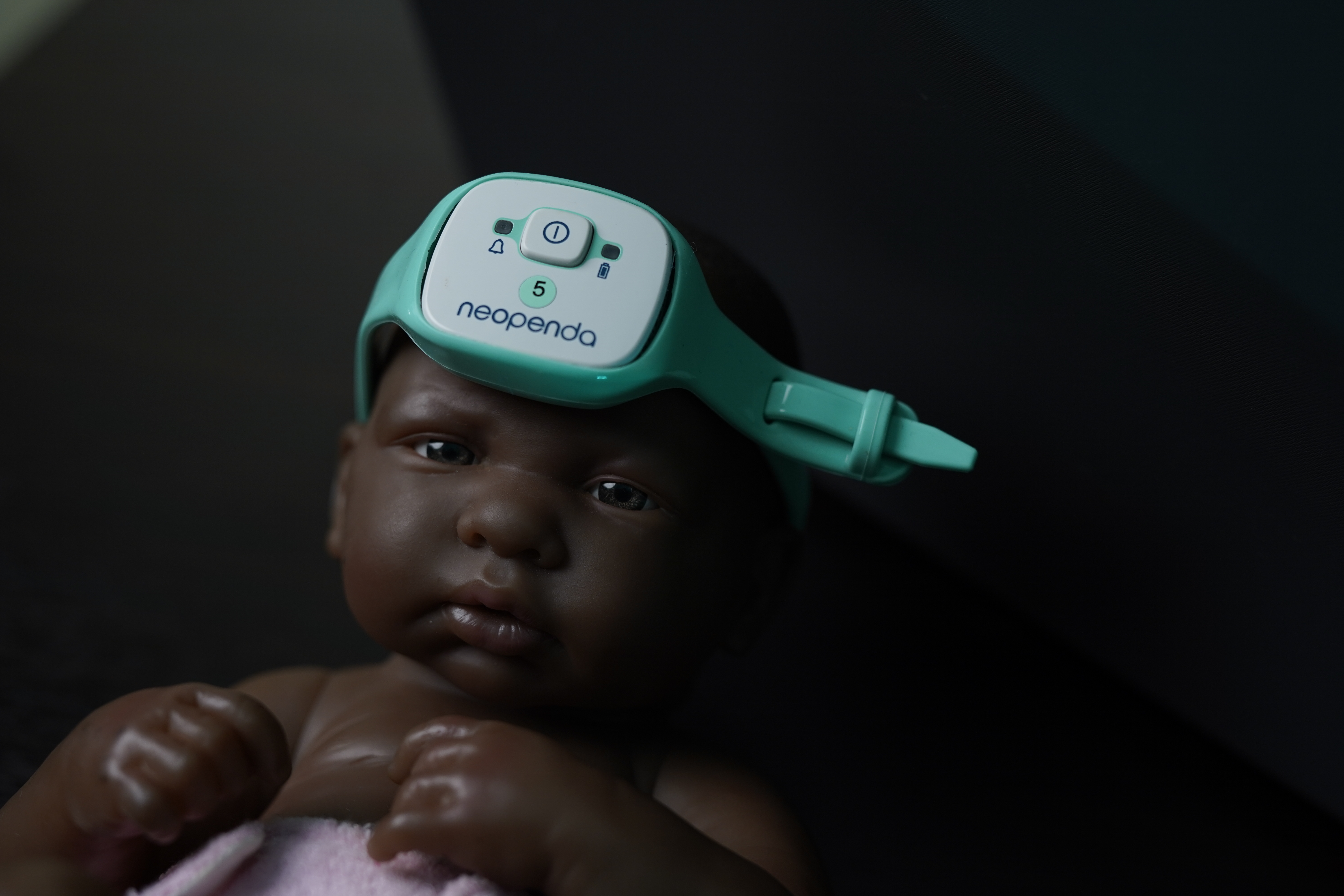
The innovation demonstrates how technology can strengthen healthcare by providing frontline workers with timely, actionable insights where time, equipment and staff are already stretched.
Within the First Minutes: Responding When Time Matters
Dr. Jesse Gitaka knows that for a newborn in distress, minutes can make a difference. For mothers and babies in rural locations, minutes without resources can result in fatality, as he saw in a rural Kenyan hospital where clinicians lacked the tools to identify the cause of infant distress in time. Why should a baby’s chance at life depend on geography? No child’s life should depend on where he or she is born.
This experience led Gitaka and his team to develop AIFYA, an AI-powered decision-support tool designed to help frontline health workers recognise danger signs early and respond faster. Named after afya, the Swahili word for health, and built on GPT-4, AIFYA guides nurses, midwives and clinicians through diagnosing and managing sick newborns in real time, drawing on Kenya's national clinical protocols. The tool was shaped alongside the frontline workers who use it and trained on locally sourced data, so that it reflects the patterns of illness seen in Kenyan newborns.
In settings where specialists may be far away and workloads are high, guidance at the bedside can bring expertise closer to the moment it is needed most and can mean the difference between life and death.
The example shows how locally designed decision support can close distance gaps by putting timely guidance into the hands of frontline teams.
Across the Care Journey: Being Heard in the Right Language
Healthcare depends on communication, yet many women still seek care in systems where workers may not speak their language or dialect.
In Uganda, researcher Professor Fred Kaggwa discovered that most of the mothers in his community could not read or write in the language used by health care providers. Many technology-based tools being developed for clinical settings were being built far from the communities in which they were meant to be adopted. This motivated Kaggwa to develop AI tools for prenatal and perinatal care that shifted patient communication from text-based systems to voice-enabled tools with capacities in various East African languages. By creating local-language datasets and tools designed around users, this work is shaping digital healthcare tools that are more accessible and more effective for the patients they are meant to serve.
By placing language and usability at the centre, this work makes clear that access is not only about technology reaching clinics, but also about women being able to understand and participate in their care.
A Different Approach to Innovation
Together, these examples show that the future of maternal and newborn care cannot be imported. It must be built in African hospitals, research centres, and communities by people who understand local challenges and are working to solve them.
The common thread among these Grand Challenges clinical innovations is their approach to technology that is based on the needs of the communities they are meant to support. These researchers are not importing systems and hoping they fit; they are working with mothers, nurses, clinicians, and communities to design tools based on lived realities, adapting to infrastructure constraints, responding to clinical needs, and building systems people can use.
Through funding, partnerships, and support for African-led science, Grand Challenges Africa is helping move ideas into applications to maternal and newborn health, while investing in local talent and long-term systems that strengthen the future of healthcare innovation across the continent.